Fuel Cell: How does it work?
A fuel cell is made of metal, graphite, electrodes and its process is chemical. A fuel cell converts chemical energy (energy stored in molecular bonds) into electrical energy. A PEM (Proton Exchange Membrane) cell uses hydrogen gas (H₂) and oxygen gas (O₂) as fuels; the generation of electricity will take place via the oxidation of a reducing fuel, hydrogen, and the reduction of an oxidant such as the oxygen contained in the air. The reaction products in the cell are water, electricity and heat. As oxygen is readily available in the atmosphere, it suffices to supply the fuel cell with hydrogen which can come from an electrolysis process.

Looking back in history
The fuel cell effect was discovered by the German Christian Schönbein in 1839. The first fuel cell laboratory model was made by William R. Grove over the following three years. In 1889, Ludwig Mond and Carl Langer gave the fuel cell its name and its current form. Francis Bacon resumed studies of the fuel cell in 1932 and made a first prototype of 1kW in 1953, then 5kW in 1959. This prototype served as a model for future fuel cells used during the Apollo space missions (Source Wikipedia: https://en.wikipedia.org/wiki/…)
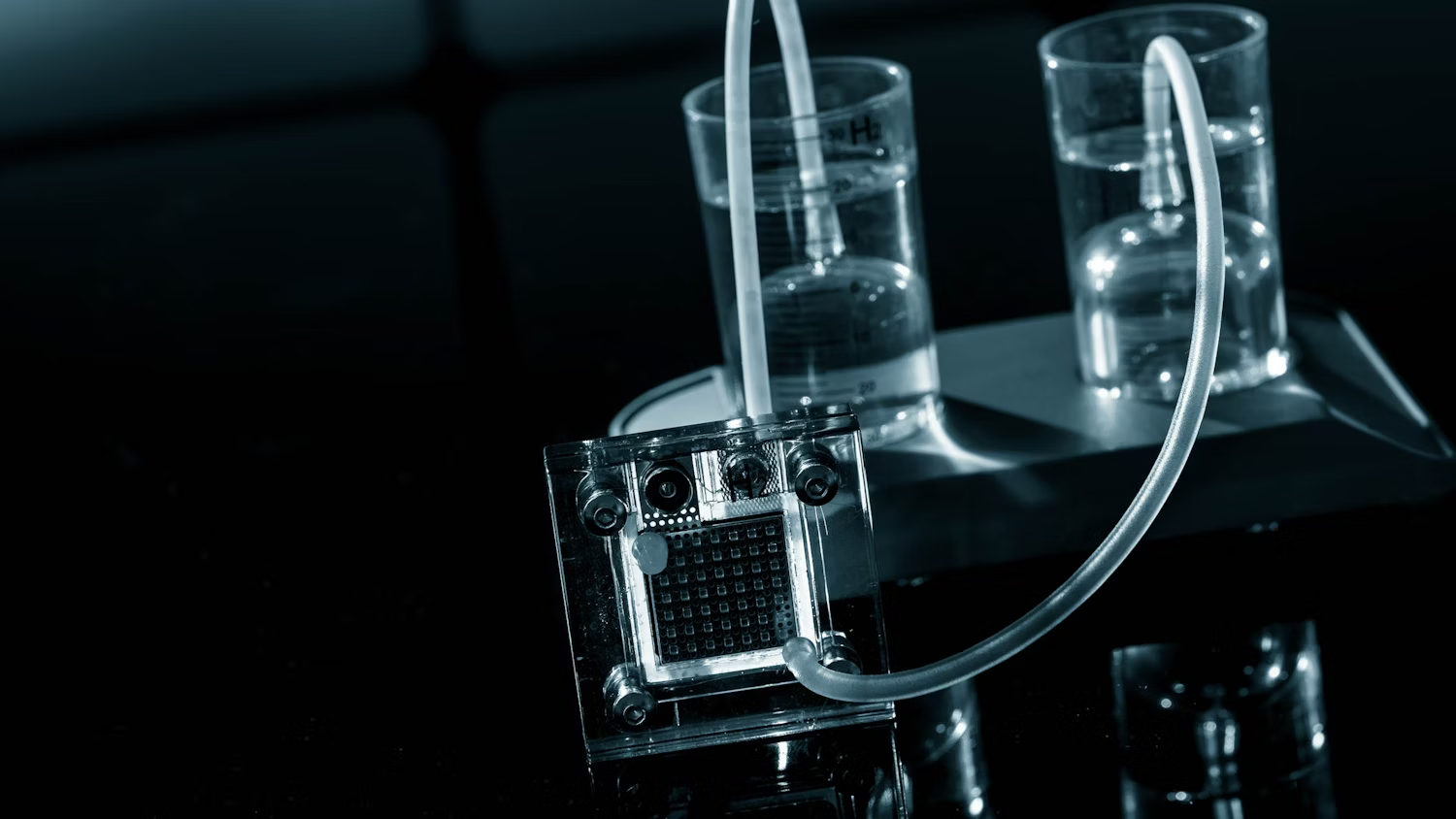

How does a fuel cell work ?
A fuel cell works by bringing hydrogen through the anode and oxygen through the cathode. On the anodic side, hydrogen molecules are split into electrons and protons. Protons cross the electrolyte membrane, while electrons are grouped through a circuit, generating an electric current and excess heat. On the cathode side, protons, electrons and oxygen combine to produce water molecules.
Fuel cells are modular. This means that individual cells are linked together to form larger stacks, and in turn these stacks can be combined into larger systems. Fuel cell systems vary greatly in size and power, from portable systems for recharging the batteries of smartphones, to combustion engine alternatives for electric vehicles, to large-scale, multi-megawatt installations providing electricity directly to the electricity grid.
The different types of fuel cells
There are several fuel cell technologies, the most widespread for mobility being the LT-PEMFC, thanks to its maturity and great compactness. A quick detailed review below.
- AFC (Alkaline Fuel Cell): they operate at a temperature between 65°C and 90°C. The Apollo missions used alkaline fuel cells.
- LT-PEMFC (Low Temperature – Proton Exchange Membrane Fuel Cells): thanks to their proton exchange membranes they benefit from a fast and powerful start. They are used to power vehicles or small installations because they operate at low temperatures (20-100°C). It is possible to operate PEMFCs with methanol by adding to the process the transformation of methanol into hydrogen through a steam reforming system – which however generates toxic carbon monoxide and CO2.
- HT-PEMFC (High Temperature – Proton Exchange Membrane Fuel Cell): Compared to the previous ones, they have the advantage of being able to work better with reformed methanol because the carbon monoxide residues are low. They also allow co-generation with heat recovery more easily because they operate at high temperature (200°C). However, they are more expensive than LT-PEMFCs and the technology is less mature and less stable.
- DMFC (Direct Methanol Fuel Cell): they are supplied directly with methanol and operate at low temperatures; the drawbacks of these methanol cells are linked to their cost, due to the presence of platinum, to the rapid degradation of their performance which limits their lifetime, and to a lower efficiency than PEMFCs. They are mainly used for very low powers.
- PAFC (Phosphoric Acid Fuel Cell): These phosphoric acid fuel cells can operate up to 2100°C. The high heat they produce makes it possible to use them for cogeneration. They generally supply stationary structures with a power of several tens of megawatts.
- MCFC (Molten Carbonate Fuel Cell): these potassium carbonate and lithium fuel cells operate at high temperatures, between 600 and 700 degrees Celsius. Their efficiency ranges from 60 to 80%. They are used to supply large stationary energy installations.
- SOFC (Solid Oxide Fuel Cell): Solid oxide fuel cells operate at an even higher temperature than the previous category (between 800 and 1,000°C). Starting slowly and requiring components that can withstand very high temperatures, such as ceramics, they are mainly used when there is an interest in co-generation with the objective of recovering fatal heat. If their efficiency is high (up to 60%) and they do not have the concern of carbon monoxide from low temperature methanol batteries, it is however necessary to absorb their harmful sulfur emissions. This is a promising technology, which also benefits from being able to operate with all types of alcohol.
What is the advantage of a fuel cell compared to a battery?
One of the major interests of a fuel cell is to be able to use the energy contained in hydrogen, produced from renewable energies such as solar power, and thus to overcome their intermittency, all of this without emission of CO2 or fine particles, with an efficiency of more than around 50%.
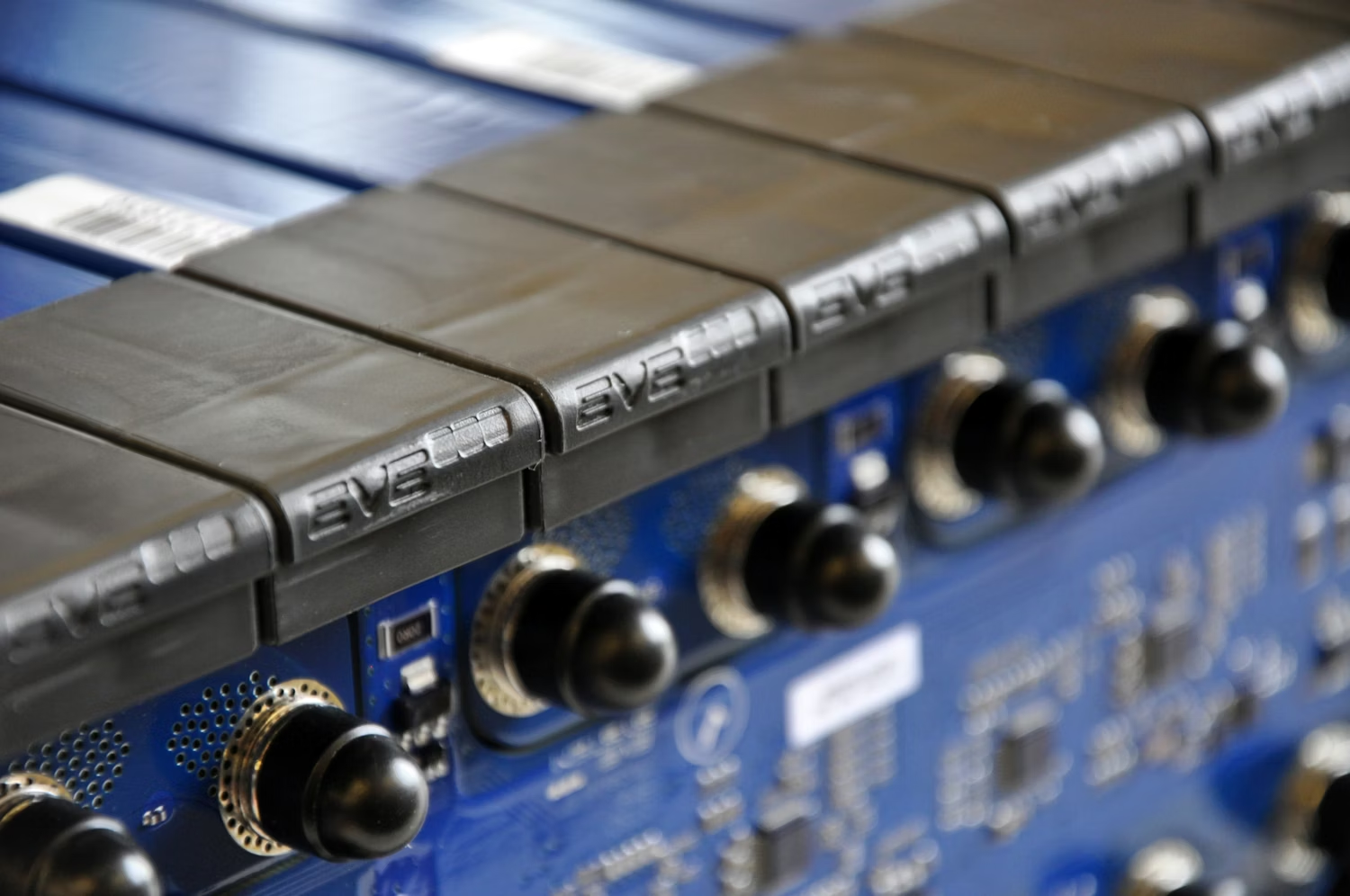
However, it would be wrong to think that fuel cell technology is an alternative to batteries. In reality, these two solutions combine and complement each other perfectly, especially when the energy they are loaded with and transformed into electricity comes from renewable sources.
The example of the Energy Observer vessel is a good illustration of the intelligence of the system developed by our engineers. To put it simply, the boat has three main operating modes:
- In normal navigation, solar or wind electricity directly powers the propulsion.
- The batteries take over in the event of a temporary drop in production, for example on cloudy days.
- In the event of a long interruption, at night for example, the fuel cell takes over and acts as a range extender by converting hydrogen reserves into electricity.
Conversely, strategies are also programmed to recharge batteries and hydrogen stocks at the right times, before these reserves run out. When the battery charge level drops below 30%, most of the electrical production is dedicated to recharging them. When the battery level is above 90% or the boat is stationary, the energy is used to produce hydrogen. Skippers can also automatically vary engine RPM (and therefore boat speed) to keep battery charge levels stable.
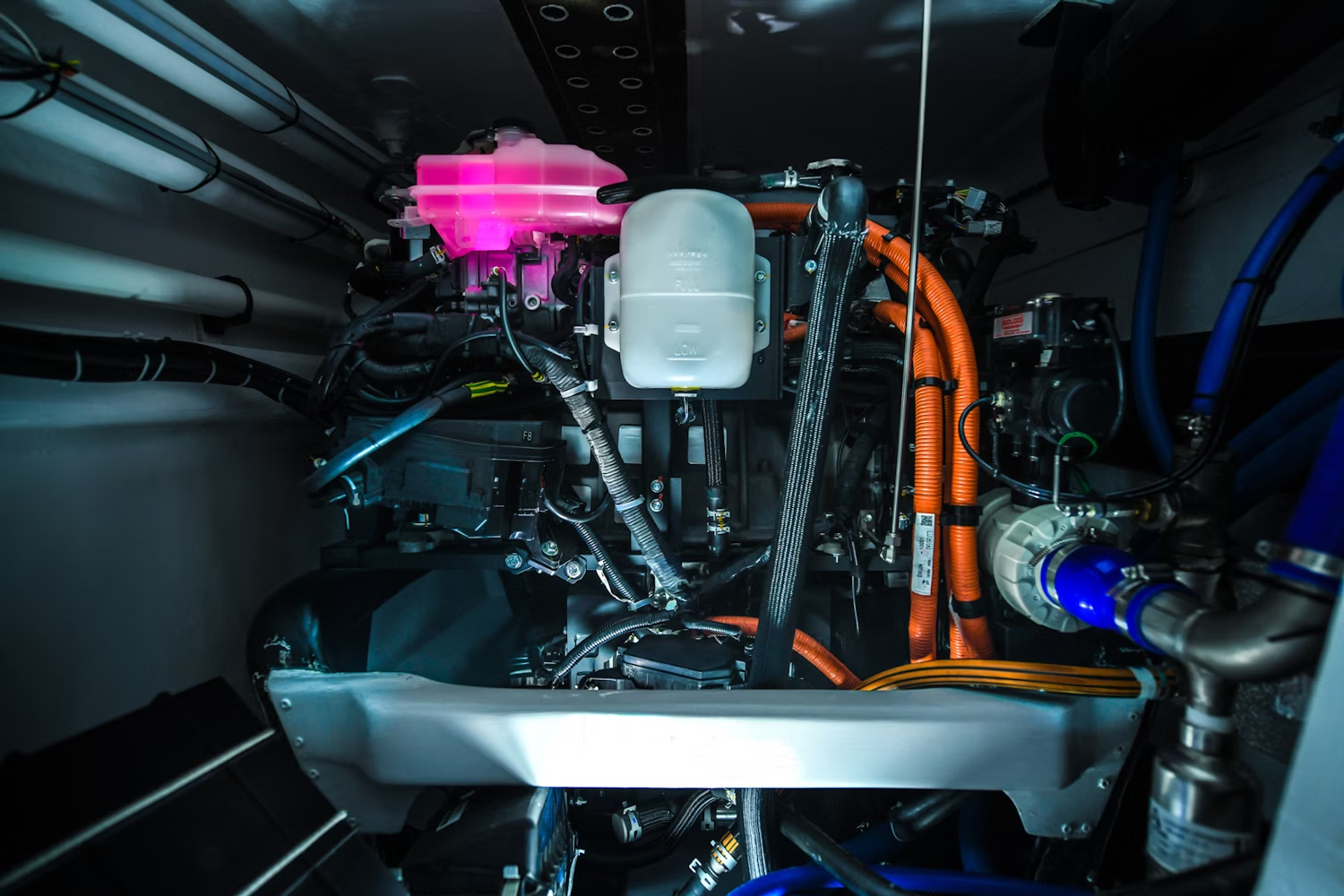
The Energy Observer experience has enabled EODev engineers to develop the REXH2® which is based on Toyota fuel cell technology. This fuel cell has already proven its benefits for many years in the Toyota Mirai, and more recently also in other mobility applications such as buses and trucks. Its use for other applications such as EODev’s GEH2 terrestrial generators is another step further towards the development of the hydrogen society.

How long does a fuel cell last, and what does it cost?
Two questions rarely covered in technical overviews decide whether a fuel cell makes sense for a given project: how long it keeps running, and what drives its price.
Operating life and what limits it
A fuel cell has no pistons, no crankshaft and no combustion, so it suffers none of the mechanical wear of a thermal engine. Its lifespan is measured in operating hours rather than in kilometres or years. EODev’s solution, built on Toyota fuel cell technology, is engineered for reliable operation up to around 13,000 hours — and often beyond, depending on use and maintenance.
What eventually limits that life is the gradual degradation of the stack: the ionomer membrane loses conductivity, the platinum catalyst slowly ages, and impurities in the hydrogen supply can accelerate the process. This is why PEM fuel cells need high-purity hydrogen and careful thermal management both handled automatically in an integrated system.


Why cost is still the main barrier
The historical cost driver of a fuel cell is the platinum used as a catalyst, even though modern designs rely on less and less of it. Beyond the stack itself, system integration, hydrogen storage and control electronics all add to the bill. The good news: mass production is steadily bringing costs down, exactly the logic behind EODev’s industrialised approach. Rather than a laboratory prototype, the GEH₂®is a series-produced, France-built generator designed for repairability and long-term reliability, with connected monitoring that anticipates maintenance before a fault occurs.
Fuel cell vs diesel generator: EODev’s real-world answer
On paper, a fuel cell is usually compared to a battery. In the field, its real competitor is the diesel generator — and that is precisely the market EODev set out to change, with a clear goal: making the replacement of diesel gensets by zero-emission solutions a practical reality.
Where a diesel generator burns fuel on site, a fuel cell converts hydrogen into electricity with only water vapour and heat as by-products: no CO₂, no NOₓ, no fine particles at the point of use. It is also remarkably quiet. At full power, the GEH® generates around 65 decibels, the level of a normal conversation against the constant roar of a combustion engine. Refuelling takes minutes, and connected monitoring tracks performance and hydrogen levels in real time.
This makes hydrogen fuel cell power a credible option wherever the grid is unavailable or diesel is unwelcome: construction sites, film sets, festivals and events, telecom relays, off-grid facilities and EV charging. At sea, the REXH2 brings the same principle to marine propulsion and on-board power, while the BESSTI® 120 pairs with the fuel cell to absorb power peaks and secure continuity of supply.


Frequently asked questions about fuel cells
Is a fuel cell dangerous?
The fuel cell itself is inherently safe: it produces only electricity, water and heat, with no combustion involved. The real safety focus is hydrogen storage, and it is heavily engineered. EODev uses Type 4 tanks compliant with the EC79/2009 standard, fitted with thermal pressure-relief devices (TPRD) that safely vent hydrogen in the event of a leak or fire. Fast-response ATEX-classified hydrogen detectors, together with heat and flame sensors, shut the system down before any concentration approaches a flammable level.
Can a fuel cell be recycled at the end of its life?
Yes. A fuel cell is almost entirely recyclable. Its only rare material is the platinum catalyst — used in ever-smaller quantities, and 100% recyclable and recycled. This reflects a wider design philosophy at EODev, where products are built to be upgraded, dismantled and recycled using low-carbon materials.
What is the difference between a fuel cell and an electrolyser?
They are the two complementary halves of the hydrogen loop. An electrolyser uses electricity to split water into hydrogen and oxygen, storing energy in the form of hydrogen. A fuel cell does the reverse: it recombines that hydrogen with oxygen from the air to generate electricity on demand. Together, they let surplus renewable energy be stored as hydrogen and converted back into power whenever it is needed.
