
Now that 4G and 5G networks are an integral part of our daily lives, and it is impossible to do without them, telephone providers are facing a crucial challenge: guaranteeing the stability and presence of a network in all circumstances. Faced with an exceptionally large crowd, or if there is no electrical connection, an electro-hydrogen generator is the solution of choice. High-performance, easy to transport and durable.
Our solutions in action
Orange 5G antenna power supply
Pending connection to the Enedis network, Orange is calling on GEH₂ to supply energy and power a relay antenna for several weeks.


The Bouygues B-Truck powered by EODev
Deployed at festivals, concerts and short-lived events, Bouygues Telecom powers its relay antenna truck with an electro-hydrogen generator.
Nos solutions en action
Découvrez tous les cas d’application
Alimentation d’une antenne 5G Orange
Dans l’attente d’un raccordement au réseau Enedis, Orange fait appel au GEH2® pour fournir de l’énergie et alimenter une antenne relais pendant plusieurs semaines.
Le B-Truck Bouygues alimenté par EODev
Déployé lors de festivals, de concerts et d’évènements éphémères, Bouygues Telecom fait le choix d’alimenter son camion antenne relai avec un groupe électro-hydrogène.
Telecom generator: technical and regulatory drivers reshaping the sector
The rollout of 5G networks is redrawing the power profile of every telecom site. A 5G base station consumes two to four times the power of its 4G predecessor, Massive MIMO antennas increase the electrical load per sector, and edge computing at the tower base adds new critical infrastructure to sustain. Meanwhile, operators face converging pressures: aging grid reliability, tightening emissions rules for standby diesel gensets, and net-zero commitments from Tier 1 telcos (Deutsche Telekom, Orange, Vodafone, Verizon) that now cover Scope 1 emissions from backup power.
Regulation is catching up. California’s CPUC 72-hour backup mandate raises the bar for cell tower resilience, low-emission zones in European city centres restrict diesel operations, and public tender scoring increasingly weighs embodied carbon and site emissions. A telecom generator today must combine reliability, extended runtime autonomy, and a decarbonisation trajectory that survives the next round of regulatory tightening.

How EODev supports telecom operators and tower companies

Zero-emission backup for cell towers, BTS and switching centres
The GEH₂® delivers 100 kVA per unit and can be paralleled to reach the power required by higher-density cell tower sites, aggregation nodes and regional switching centres. It integrates with existing UPS, ATS and paralleling switchgear like a conventional genset — but without local CO₂, NOx or particulate emissions, and with very low noise output compatible with urban and residential zones.
Off-grid and remote telecom power
Remote cell towers, greenfield sites awaiting utility interconnection, and rural coverage points often rely on diesel gensets for prime or hybrid power. A GEH₂® + BESSTIE® 120 hybrid setup delivers continuous zero-emission power in these locations, extends autonomy through battery buffering, and reduces the logistics burden of diesel resupply on hard-to-access sites.
Instantaneous response and load smoothing with battery storage
Cell tower load profiles include high transient peaks — Massive MIMO bursts, base station starts, edge computing spikes. The BESSTIE® 120 absorbs these transients, delivers instantaneous power during ATS switchover, and reduces the sizing constraints on the primary energy source. It integrates alongside existing lithium-ion or lead-acid UPS banks, complementing rather than replacing them.
A field-proven fuel cell platform across critical infrastructure
The Toyota fuel cell inside the GEH₂® is the same platform used in the REXH₂®, our marine hydrogen solution certified by Bureau Veritas (TAC certification) and deployed on professional and competition vessels including America’s Cup chase boats. This common core delivers the reliability, safety maturity and long-term service track record required for mission-critical telecom infrastructure.
FAQ — Zero-emission telecom generator
How does a hydrogen telecom generator integrate with existing UPS and ATS architectures?
The GEH₂® provides standard AC power that connects to conventional ATS and paralleling switchgear, exactly like a diesel genset. The transition from utility to backup is transparent to downstream UPS and radio equipment. The BESSTIE® 120 sits alongside the UPS layer for instantaneous response and peak absorption, complementing rather than replacing existing lithium-ion or lead-acid battery banks.
Can a hydrogen generator meet extended runtime mandates like the CPUC 72-hour requirement?
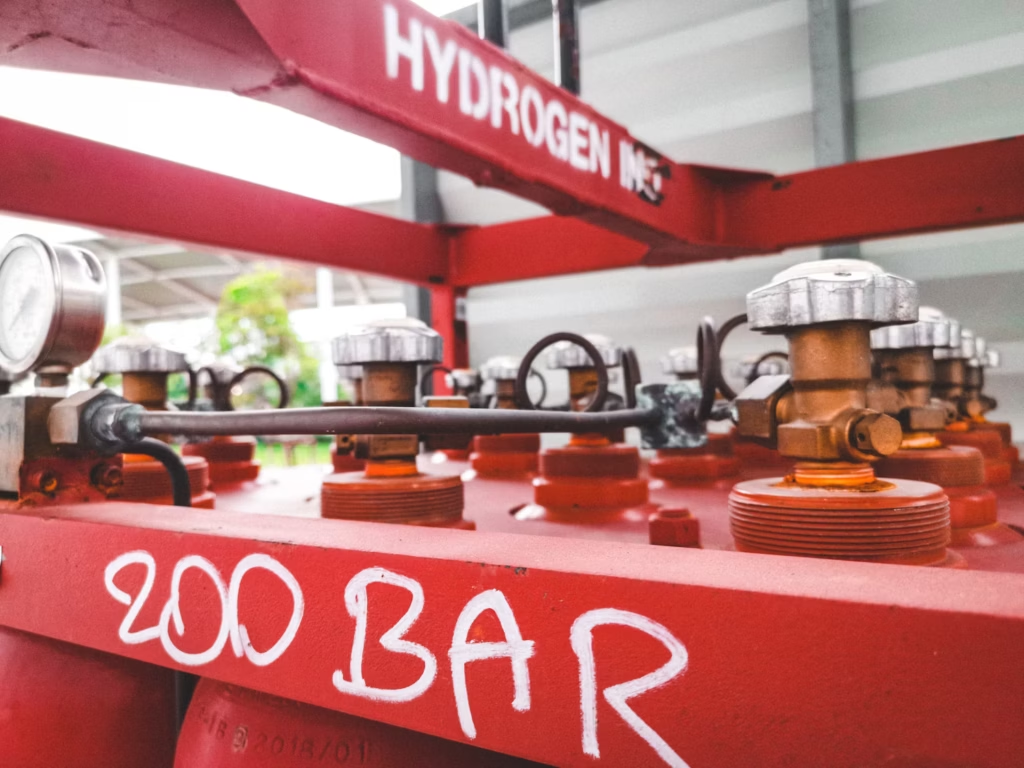
Yes. Runtime is a function of on-site hydrogen storage capacity and generator load. Racks of compressed hydrogen can be sized to meet 72-hour or longer autonomy targets, in line with the CPUC mandate applicable to California cell sites. Scheduled resupply follows a logic close to diesel delivery — with no local combustion emissions during the runtime itself.
Is a hydrogen generator suited to 5G power escalation and Massive MIMO loads?
Yes. The GEH₂® delivers 100 kVA per unit and can be paralleled to match the higher power profiles of 5G Sub-6 and 5G mmWave sites, including Massive MIMO configurations. Combined with the BESSTIE® 120, it absorbs the transient peaks characteristic of 5G loads without oversizing the primary source.
How does the noise profile of a hydrogen generator compare with diesel for urban cell towers?
The GEH₂® runs on a fuel cell — no combustion engine, no combustion noise, no vibration. This makes it directly deployable in dense urban environments, residential neighbourhoods, and mixed-use rooftop cell sites where diesel gensets face acceptance and permitting challenges.
How do I evaluate an EODev solution for my telecom network?
EODev designs and manufactures the GEH₂® and BESSTIE® 120. To assess the right configuration for your sites — backup vs. prime power profile, runtime target, integration with existing UPS/ATS architecture, hydrogen logistics — contact our team. We support you in defining your zero-emission telecom power strategy.


